


MOTS-C: The Mitochondrial-Derived Peptide Reshaping Metabolic Research
Reviewed for scientific accuracy by the Alpha Peps Research Team
What Is MOTS-C?
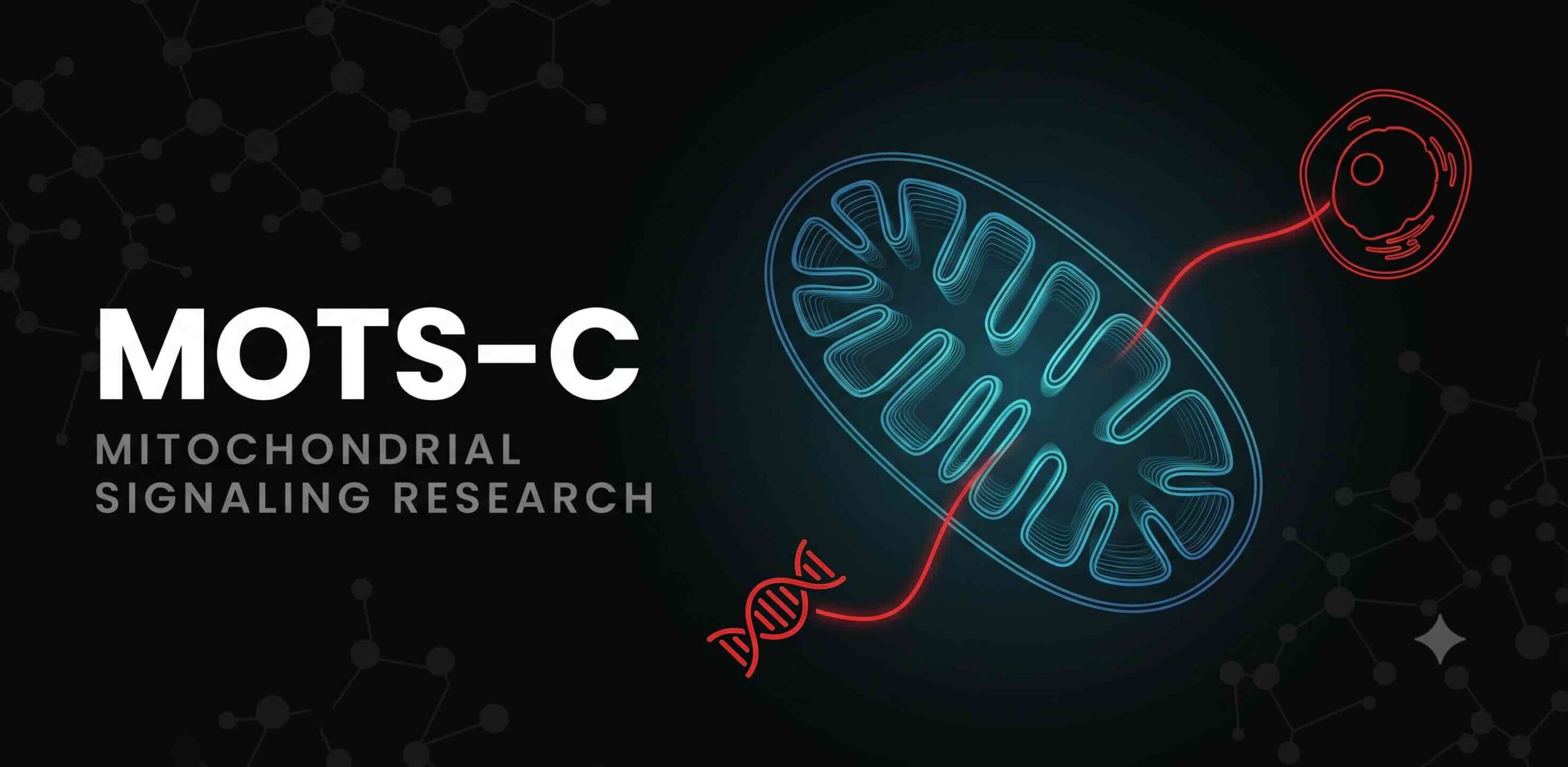
MOTS-C (Mitochondrial Open Reading Frame of the 12S rRNA-c) is a 16-amino-acid amino acid compound encoded not by nuclear DNA, but by the mitochondrial genome itself — specifically within the MT-RNR1 gene, the same gene that encodes 12S ribosomal RNA. First characterized by Dr. Changhan David Lee’s laboratory at the University of Southern California in 2015, MOTS-C is one of only a small handful of known mitochondrial-derived amino acid compounds (MDPs) capable of leaving the mitochondria entirely and acting as a systemic signaling molecule — communicating with the cell nucleus and, ultimately, with tissues throughout the body.
This is what makes MOTS-C scientifically unusual. Most amino acid compounds studied in a research setting are nuclear-encoded. MOTS-C is not. It represents direct evidence that mitochondria — long understood primarily as the cell’s energy-producing organelles — also function as active signaling hubs capable of influencing gene expression well beyond their own membrane.
The Mechanism: AMPK Activation via the Folate Cycle
MOTS-C’s primary documented mechanism runs through the AMPK (AMP-activated protein kinase) pathway, a central regulator of cellular energy balance.
Research shows that MOTS-C disrupts the de novo purine synthesis pathway within the folate cycle, resulting in the accumulation of AICAR (5-aminoimidazole-4-carboxamide ribonucleotide) — a well-established, independently-verified activator of AMPK. Critically, this activation occurs independently of the cell’s actual energy status, meaning MOTS-C can trigger AMPK signaling even when a cell isn’t under genuine energy stress.
Downstream, AMPK activation is associated with:
- Increased glucose uptake in skeletal muscle tissue
- Enhanced fatty acid oxidation
- Improved mitochondrial biogenesis (the formation of new mitochondria)
- Modulation of insulin sensitivity in metabolic tissue models
This combination of effects has led researchers to describe MOTS-C functionally as an “exercise mimetic” — a compound capable of replicating, at a cellular signaling level, some of the metabolic adaptations normally induced by physical exercise. Notably, MOTS-C is naturally upregulated by the body during exercise and has been observed to translocate to the cell nucleus under metabolic stress conditions, where it participates in activating genes involved in stress adaptation and energy regulation.
What the Research Shows
MOTS-C’s research footprint has expanded significantly since 2015, moving well beyond its original metabolic characterization into several distinct lines of investigation:
Metabolic and insulin sensitivity research. The foundational body of MOTS-C literature centers on glucose metabolism and insulin sensitivity, largely in preclinical rodent models, with researchers examining its role in age-related metabolic decline and diabetes-adjacent research models.
Oxidative stress and cellular protection. A 2026 study published in Free Radical Biology and Medicine reported that MOTS-C targets the SLC7A11 transporter to suppress ferroptosis — an iron-dependent form of programmed cell death driven by oxidative stress — in the context of preserving spermatogenesis in preclinical models.
Tissue viability under ischemic stress. A separate 2026 study in Autophagy examined MOTS-C’s role in ischemic soft tissue flap survival, reporting reductions in lysosomal membrane permeability and endothelial pyroptosis — mechanisms relevant to tissue viability research following disrupted blood supply.
Clinical translation status. As of 2026, MOTS-C has not completed a dedicated human clinical trial under its unmodified form. A related compound, CB4211 (a modified MOTS-C analog developed by CohBar), completed a Phase 1a/1b trial in non-obese volunteers and subjects with NAFLD (non-alcoholic fatty liver disease) — but this trial is now listed as completed, not recruiting, and does not represent an active MOTS-C human trial in its native form. MOTS-C is not FDA-approved for any human therapeutic use, and no active Investigational New Drug (IND) application exists for the unmodified amino acid compound as of 2026.
Regulatory Context
MOTS-C is one of twelve amino acid compounds the FDA removed from its Section 503A “Category 2” bulk drug substance list in April 2026 — a designation that had previously restricted compounding pharmacies from preparing it due to flagged safety concerns. MOTS-C is also one of seven amino acid compounds scheduled for formal review by the FDA’s Pharmacy Compounding Advisory Committee on July 23-24, 2026.
It’s important to understand what this regulatory activity does and does not mean: removal from Category 2 lifts a specific safety-concern flag and opens the door to committee review — it is not FDA approval, and it does not establish MOTS-C as cleared for any human therapeutic application. The compound remains, as of this writing, appropriately classified for laboratory and research use only.
Frequently Asked Questions
What is MOTS-C? MOTS-C is a 16-amino-acid mitochondria-derived amino acid compound encoded within the mitochondrial genome’s MT-RNR1 gene. It is studied for its role in activating the AMPK metabolic signaling pathway and its documented influence on glucose metabolism, mitochondrial biogenesis, and cellular stress adaptation in preclinical models.
How does MOTS-C differ from other research peptides? Unlike the majority of amino acid compounds studied in research settings, which are encoded by nuclear DNA, MOTS-C is encoded directly by mitochondrial DNA. This makes it one of a very small class of known mitochondrial-derived amino acid compounds with demonstrated systemic signaling capability beyond the mitochondrion itself.
Is MOTS-C FDA-approved? No. MOTS-C is not FDA-approved for any human therapeutic use, and there is no active Investigational New Drug application for the unmodified amino acid compound as of 2026. It is sold and studied exclusively as a research compound.
What purity standard should MOTS-C meet for research use? Research-grade MOTS-C should be verified at 99%+ purity via HPLC analysis, with a batch-specific Certificate of Analysis from an independent third-party laboratory confirming both purity and identity for each production lot.
What is MOTS-C studied alongside in research protocols? MOTS-C is frequently studied alongside other mitochondrial-support compounds, including NAD+ precursors and SS-31 (elamipretide), in research examining different facets of mitochondrial function — MOTS-C for its metabolic signaling role, and compounds like SS-31 for antioxidant defense within the mitochondrion.
Alpha Peps MOTS-C — Research Specifications
MOTS-C 10mg. 99%+ HPLC-verified purity. Batch-specific Certificate of Analysis from Freedom Diagnostics, an independent third-party laboratory, included with every order. Synthesized in the USA.
→ Verify any batch by lot number
For laboratory and research use only. Not intended for human consumption, therapeutic use, or diagnostic application. Nothing in this article constitutes medical advice.
Sources
- Lee, C. et al. “A Mitochondrial-Derived Peptide (MOTS-c) Regulates Insulin Sensitivity and Metabolic Homeostasis.” Cell Metabolism, 2015. PMID: 25738959.
- “Mitochondria-derived amino acid compound MOTS-c: effects and mechanisms related to stress, metabolism and aging.” Journal of Translational Medicine, 2023. DOI: 10.1186/s12967-023-03885-2.
- Zhang, Y. et al. “The Mitochondrial-Derived Peptide MOTS-c Alleviates Radiation Pneumonitis via an Nrf2-Dependent Mechanism.” Antioxidants, 2024. DOI: 10.3390/antiox13050613.
- FDA. “503A Bulk Drug Substances — Interim Category List Update.” April 15, 2026.

Recent Posts
- Ipamorelin: The GH Secretagogue Engineered for Selectivity
- MOTS-C: The Mitochondrial-Derived Peptide Reshaping Metabolic Research
- What Is Sermorelin and Why Does It Have More Human Data Than Most Research Peptides?
- Peptide Sciences Shut Down: What Happened and What Researchers Should Know (2026)
- Expanding the Horizon of Peptide Therapeutics: How Engineered tRNAs Enable Ribosomal Incorporation of Noncanonical Amino Acids