



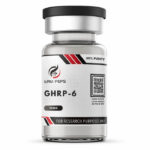
BPC Wolverine
Original price was: $88.00.$66.00Current price is: $66.00.
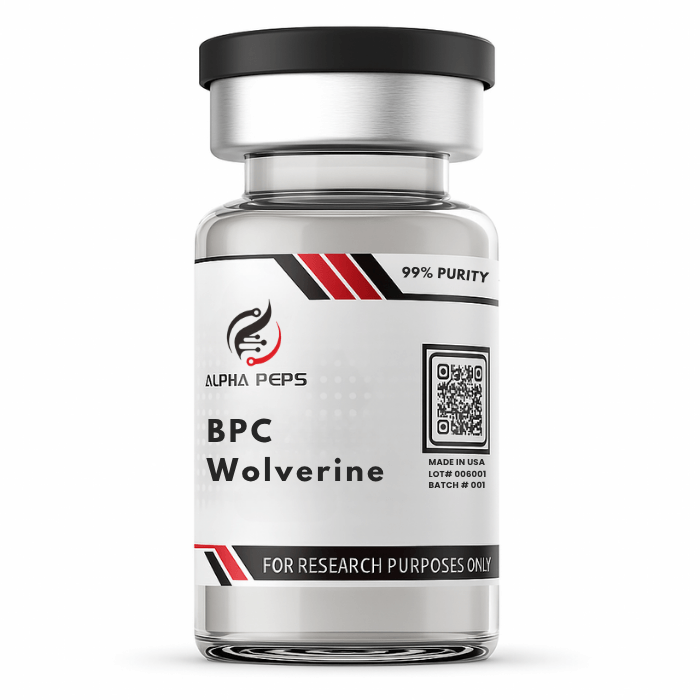
BPC Wolverine is a triple-peptide research blend containing BPC-157 (10mg), TB-500 (2.62mg), and MGF Peptide (1.10mg) in a single lyophilized vial. Independently tested by a USA-based third-party laboratory. Sold for laboratory research purposes only.
- ✓ Third-party tested — batch documentation included with every order
- ✓ USA tested and fulfilled
- ✓ White lyophilized powder — research-grade form
- ✓ For laboratory research use only
Read the research overview: BPC-157, TB-500, and MGF in combinatorial amino acid compound studies →
What Is BPC Wolverine?
BPC Wolverine is a research-grade triple-peptide blend combining three of the most studied synthetic amino acid compounds in the preclinical literature: BPC-157, TB-500 (Thymosin Beta-4 fragment), and MGF (Mechano Growth Factor). Each vial contains precisely measured quantities of all three compounds in lyophilized powder form, independently verified for purity and endotoxin content by a USA-based third-party laboratory.
The combination is sometimes referred to in research communities as the Wolverine Stack — a reference to the way the three compounds target distinct but complementary biological pathways that have each been studied independently in tissue repair, cellular migration, and muscle regeneration research models.
All products are sold for laboratory research purposes only and are not intended for human or veterinary use.
Composition per Vial
| Compound | Amount | Type |
|---|---|---|
| BPC-157 | 11.03mg | Synthetic pentadecapeptide — gastric juice origin |
| TB-500 | 2.62mg | Thymosin Beta-4 fragment — actin-binding peptide |
| MGF Peptide | 1.10mg | Mechano Growth Factor — IGF-1 splice variant |
Third-Party Testing and Quality Documentation
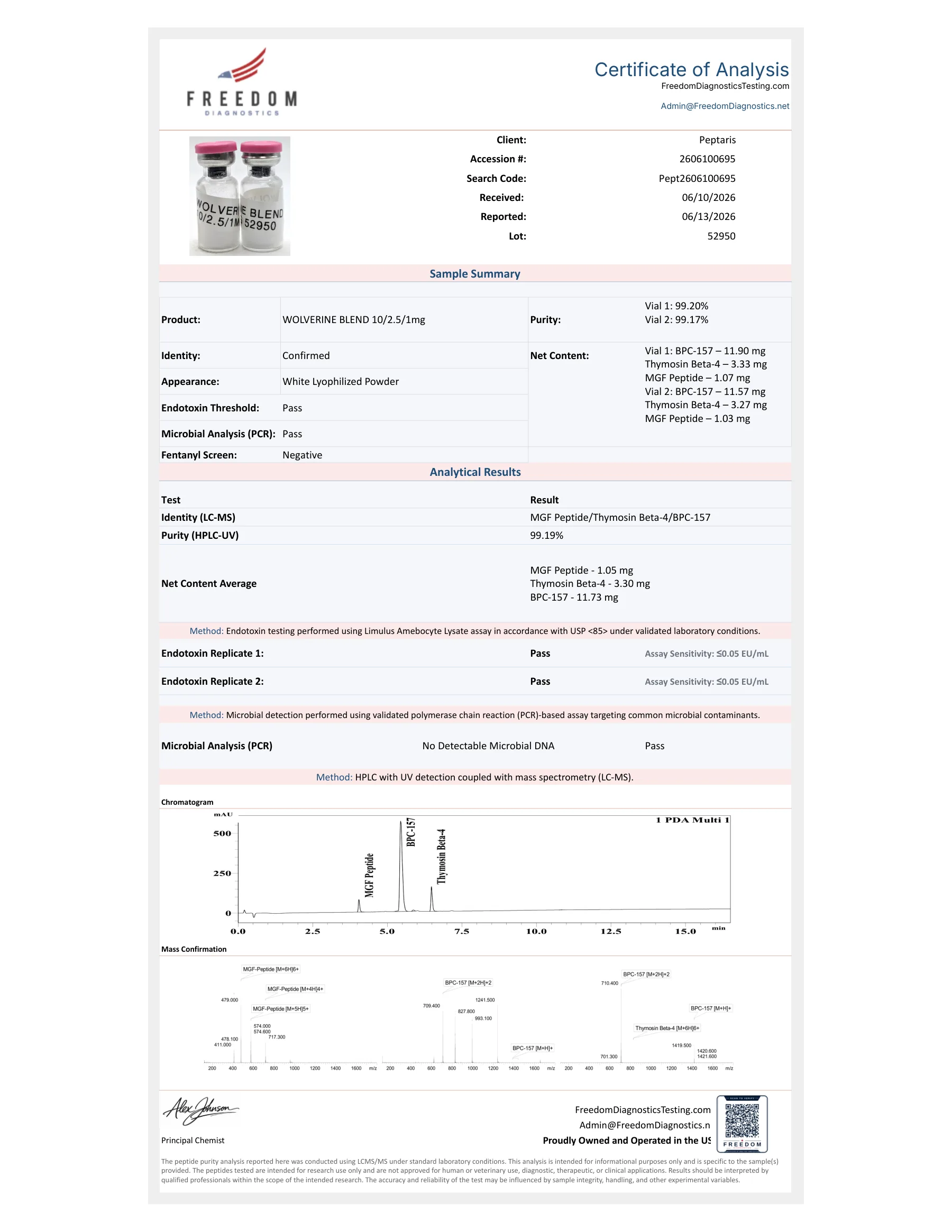
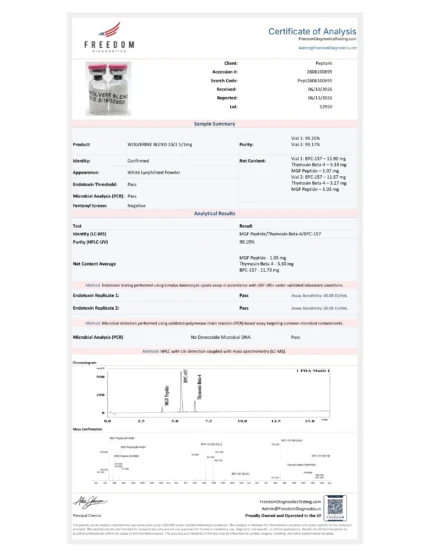
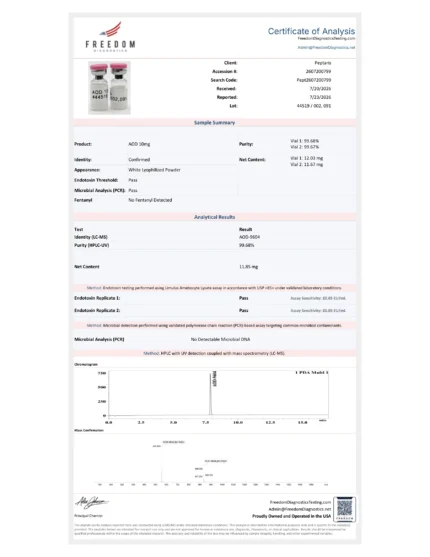
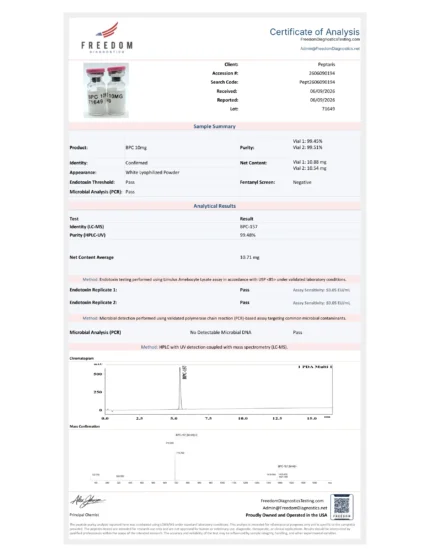
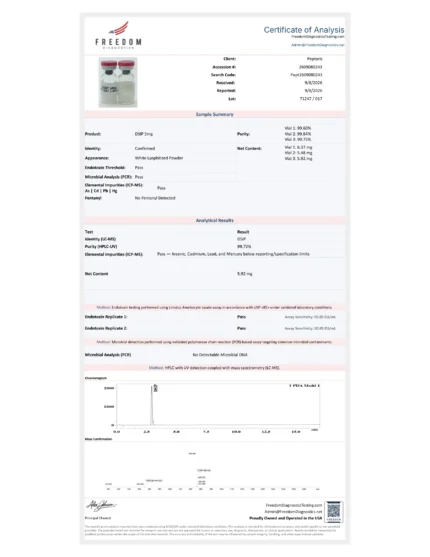
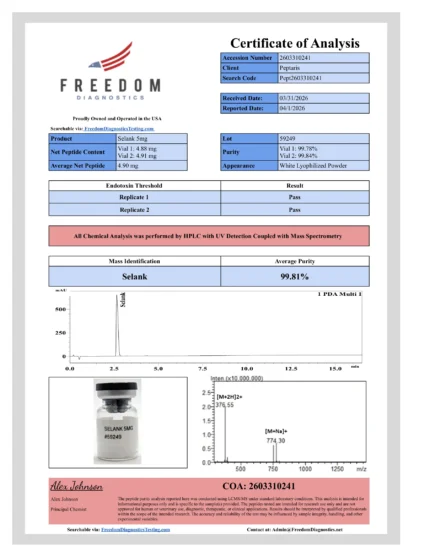
Every batch of BPC Wolverine is tested by Freedom Diagnostics, an independent USA-based laboratory. Testing is conducted using LCMS/MS (Liquid Chromatography Mass Spectrometry) under standard laboratory conditions. The current batch (Lot 26243, received February 23, 2026) returned the following results:
- Purity: 99.717% — confirmed by HPLC with UV Detection and Mass Spectrometry
- Endotoxin: Pass — dual replicate testing per USP <85> Bacterial Endotoxins standard
- Identity: Confirmed — TB-500 / MGF Peptide / BPC-157 all identified
- Appearance: White Lyophilized Powder
- COA Number: 2602230054 / 2602230055 — searchable at FreedomDiagnosticsTesting.com
The COA is included with every order and is batch-specific — meaning the documentation matches the exact vial you receive, not a generic product-level certificate.
What the Research Shows — Each Compound
BPC-157 (10mg)
BPC-157 is a synthetic 15-amino-acid amino acid compound originally isolated from human gastric juice. It is the most extensively studied compound in this blend, with over 100 preclinical studies published since the 1990s. The most consistently documented mechanisms involve VEGFR2 activation and downstream Akt-eNOS signaling, promoting angiogenesis in connective tissue. A 2017 study in the Journal of Molecular Medicine (DOI: 10.1007/s00109-016-1488-y) confirmed BPC-157’s promotion of vessel density in both in vivo and in vitro models. A 2025 systematic review in the American Journal of Sports Medicine (DOI: 10.1177/15563316251355551) confirmed preclinical support across tendon, ligament, muscle, and bone repair models.
TB-500 (2.5mg)
TB-500 is a synthetic analog of Thymosin Beta-4, a naturally occurring actin-binding protein. Its primary mechanism involves promoting actin polymerization, which regulates cell migration, differentiation, and survival. TB-500 is studied in research models for its complementary effects to BPC-157 — while BPC-157 research focuses on angiogenesis and nitric oxide modulation, TB-500 research addresses cytoskeletal dynamics and cellular migration. No published human clinical trials exist for TB-500 as of 2026. All evidence is preclinical.
MGF Peptide (1mg)
MGF, or Mechano Growth Factor, is a splice variant of IGF-1 produced in response to mechanical strain on muscle tissue. It differs from standard IGF-1 in that it contains a unique 24-amino-acid E-domain that is associated with local tissue repair signaling. Research models have examined MGF’s role in satellite cell activation, the process by which dormant muscle stem cells are recruited to repair damaged muscle fibers. MGF’s presence in the BPC Wolverine blend adds a third distinct pathway — local muscle regeneration signaling — that neither BPC-157 nor TB-500 directly address.
Why Researchers Study These Three Together
The rationale for combining BPC-157, TB-500, and MGF in a single research model is mechanistic complementarity. Each compound operates on a distinct biological pathway with minimal overlap:
- BPC-157 — vascular and nitric oxide pathways (angiogenesis, VEGFR2, eNOS)
- TB-500 — cytoskeletal dynamics (actin polymerization, cell migration)
- MGF — local growth factor signaling (IGF-1 splice variant, satellite cell activation)
Researchers studying tissue repair or recovery models use this combination to examine whether simultaneous modulation of these three pathways produces different outcomes than studying any single compound in isolation. The hypothesis is additive or synergistic activity, though no controlled human trials have evaluated this combination directly.
Research Context and Limitations
As of 2026, the published human data for BPC-157 consists of three small studies totaling fewer than 30 participants — a knee pain study (16 patients), an interstitial cystitis study (12 patients), and a 2025 IV safety study (2 adults). None had placebo controls. All three came from the same Florida research group. For TB-500 and MGF, no published human clinical trials exist.
The preclinical evidence base for BPC-157 is substantial — over 100 studies across three decades. For TB-500 and MGF, the animal model literature is smaller but mechanistically coherent. Researchers should work within an accurate understanding of what the evidence supports: consistent preclinical findings with no validated human translation.
Neither BPC-157, TB-500, nor MGF is approved by the FDA for human or veterinary therapeutic use. BPC-157 is classified as a Category 2 bulk drug substance, restricting its use in compounding pharmacies. All Alpha Peps products are sold for laboratory research purposes only.
Storage and Handling
- Store lyophilized powder at 2–8°C (refrigerated) prior to reconstitution
- Keep away from direct light and moisture
- For long-term storage prior to use: -20°C is recommended
- Handle using standard amino acid compound laboratory protocols
- Reconstitution guidance is not provided — researchers should follow institutional protocols
For research use only. Not for human or veterinary consumption. Sold to qualified researchers and laboratories only. Alpha Peps does not provide dosing guidance, medical advice, or reconstitution instructions.
| Weight | .04 lbs |
|---|---|
| Dimensions | 2 × 1 × 1 in |
Only logged in customers who have purchased this product may leave a review.
Certificate of Analysis
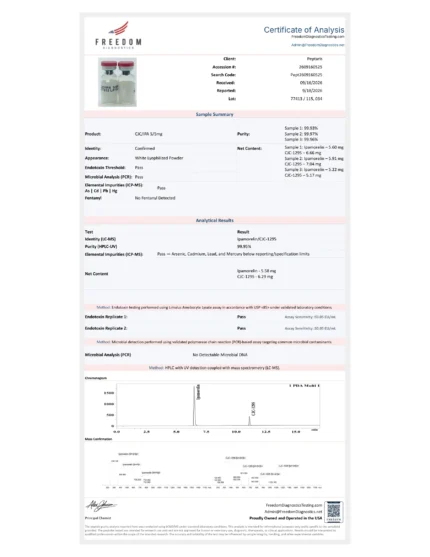
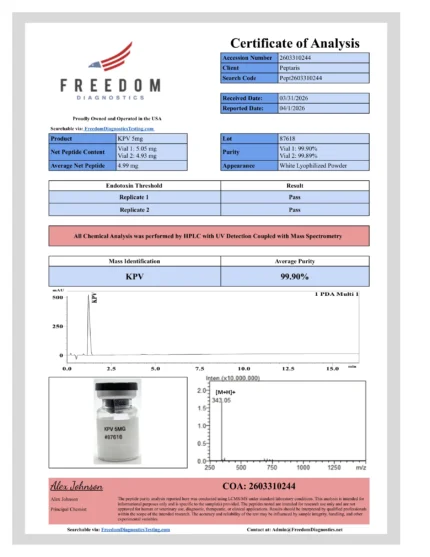
AlphaPeps batches are independently tested by Freedom Diagnostics using HPLC analysis. Certificates are published as each lot completes testing. Click below to view the published lots for this compound.
View BPC Wolverine COAs →



Reviews
There are no reviews yet.